Article Plan: Manual Dirt Bike
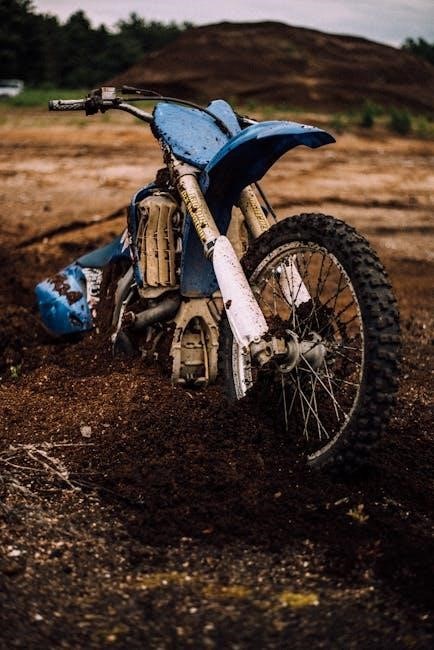
Discover the world of manual dirt bikes, exploring their types, history, and maintenance. Learn about 2-stroke vs. 4-stroke engines and Popular Makes like the X-PRO Storm 150. Master riding techniques and conversions for enhanced performance. Find eco-friendly options and future trends. Manuals for maintenance are also a must for every rider.
What Are Manual Dirt Bikes?
Manual dirt bikes are motorcycles designed for off-road use, featuring a manual transmission system that allows riders to control gear shifting. Unlike automatic bikes, manual dirt bikes require the rider to use a clutch and shift lever, offering greater control and precision. These bikes are built for performance, durability, and versatility, often with lightweight frames and powerful engines. Riders appreciate the direct connection to the bike’s mechanics, enabling better acceleration and adaptability to varying terrain. Whether on trails or race tracks, manual dirt bikes remain a favorite among enthusiasts for their raw power and engagement. Designed for both fun and functionality, they are a cornerstone of off-road motorcycling.
Brief History of Dirt Bikes
Dirt bikes originated in the early 20th century as specialized motorcycles designed for off-road use. Their history boasts innovations like lightweight frames and powerful engines, withamaha and Honda leading technological advancements. The 1960s saw the rise of 2-stroke engines, dominating motocross racing. Modern dirt bikes now feature electric starters, disc brakes, and advanced suspensions. From their humble beginnings to today’s high-tech machines, dirt bikes remain a symbol of freedom and adventure, evolving to meet the demands of riders worldwide.
Importance of Manual Transmission in Dirt Bikes
Manual transmissions in dirt bikes offer riders unparalleled control and responsiveness. Unlike automatic systems, manual gearboxes allow for precise shifting, critical for performing on varied terrains and at varying speeds. They also contribute to durability, as they are simpler and require less maintenance than automatic alternatives. Additionally, manual transmissions enhance a rider’s ability to adapt to changing conditions, making them a cornerstone of dirt bike performance. This simplicity and reliability make manual transmissions a preferred choice for both beginner and experienced riders alike.

Types of Manual Dirt Bikes
Manual dirt bikes vary in engine types, such as 2-stroke vs. 4-stroke, and transmission configurations; Options include models like the X-PRO Storm 150 with a 4-speed manual transmission or the Baja 70 Dirt Runner. Riders can choose between sport, trail, or street-oriented bikes, each designed for specific riding styles and terrains.
2-Stroke vs. 4-Stroke Engines
Manual dirt bikes often feature either 2-stroke or 4-stroke engines, each with unique benefits. 2-stroke engines are known for their lightweight design and high power output, making them ideal for aggressive riding and tight maneuvers. However, they require more frequent oil changes and have higher emissions. On the other hand, 4-stroke engines offer better fuel efficiency, reduced maintenance, and lower emissions, making them a popular choice for everyday use. The X-PRO Storm 150, for example, features a 4-stroke engine with electric/kick start, providing a balance of performance and reliability. Riders often debate the pros and cons, with some favoring the simplicity of 2-strokes and others preferring the longevity of 4-strokes. The choice ultimately depends on riding style, terrain, and personal preference. Both engine types have their supporters, ensuring a diverse market for manual dirt bike enthusiasts.
Manual Transmission Variations
Manual dirt bikes offer a variety of transmission setups, With options like 4-speed or 5-speed, riders can choose depending on their needs. A manual transmission provides precise control over gear shifting, essential for performance and efficiency. Riders often prefer manual transmissions for their durability and ability to handle tough terrains. Variations include clutch mechanisms, shifting patterns, and gear ratios, Which can be customized for specific riding styles. The X-PRO Storm 150 exemplifies this with its 4-speed manual transmission, Combining reliability and responsiveness. Manual transmissions are a defining feature of dirt bikes, Enhancing rider skill and adaptability on the trail.
Popular Makes and Models of Manual Dirt Bikes
Several brands dominate the manual dirt bike market, Offering models that cater to both beginners and seasoned riders. The X-PRO Storm 150 is a standout with its 4-speed manual transmission, electric/kick start, and large 19/16-inch tires. Other notable brands include Suzuki,, and Yamaha, known for their reliability and power. The PW50 is a budget-friendly option, while the Baja 70 Dirt Runner and SSR 125 manual pit bike are favorites among enthusiasts. These models combine performance, durability, and an affordable price point, making them ideal for various riding conditions. Riders often prefer manual transmissions for better control and engagement.
Choosing the Right Manual Dirt Bike
Selecting a manual dirt bike involves considering factors like engine size, rider experience, and riding style. Prioritize fuel efficiency, budget, and reliability. Ensure the bike meets your performance needs for a rewarding dirt-biking experience.
Factors to Consider When Buying a Manual Dirt Bike
When choosing a manual dirt bike, prioritize factors like engine size and type, whether 2-stroke or 4-stroke. Consider the transmission layout and your riding skill level. Assess the bike’s intended use, such as trail riding or racing. Budget is crucial, so compare models like the X-PRO Storm 150 for value. Look into maintenance requirements and availability of user manuals. Balancing performance, reliability, and personal preferences ensures a bike that suits your needs and enhances your riding experience.
Key Features to Look for in a Manual Dirt Bike
When selecting a manual dirt bike, prioritize key features such as engine performance, gear ratio versatility, and tire size for optimal traction. Look for robust suspension systems and powerful braking mechanisms. Ensure the bike has an ergonomic design for comfort and control. Check for features like electric/kick start functionality, as seen in the X-PRO Storm 150. Additionally, verify the availability of user manuals for easy maintenance and troubleshooting. A reliable clutch system and lightweight frame are also essential for superior handling and durability.
Budget-Friendly Manual Dirt Bike Options
For riders seeking an affordable manual dirt bike, consider models like the X-PRO Storm 150, featuring a 4-speed manual transmission and electric/kick start. Entry-level bikes often balance performance and cost, making them ideal for beginners. Look for options with reliable engines and durable frames. Chinese pocket dirt bikes are another budget-friendly choice, offering compact designs and manual transmissions. When shopping, prioritize features like tire size, suspension quality, and engine type. Regular maintenance and budget-friendly upkeeps can ensure longevity. Don’t hesitate to explore used models or rentals for realistic testing. Always compare prices and check reviews to make an informed decision for your dirt biking adventures.

Maintenance and Repair of Manual Dirt Bikes
Regular maintenance is crucial for manual dirt bikes, including_chain cleaning, oil changes, and tire inspections. Troubleshooting common issues like clutch engagement and spark plug wear ensures reliable performance. Replacing worn components, such as tires or brake pads, prevents costly repairs and prolongs bike life.
Essential Maintenance Tips for Manual Dirt Bikes
Regular maintenance ensures optimal performance and longevity of manual dirt bikes. Check and change engine oil, clean or replace air filters, and inspect chains for wear or rust. Lubricate moving parts like the chain and sprocket with high-quality grease. Inspect tires for punctures, tread wear, and proper inflation levels. Clean the bike after every ride to prevent dirt buildup and corrosion. Inspect the braking system for excessive wear or leaks. Replace worn-out clutch belts or cables promptly. Keep the fuel system clean and free of contaminants. Perform periodic inspections of the engine, transmission, and suspension. Always follow the manufacturer’s maintenance schedule. Proper care prolongs the bike’s life and enhances safety during rides. For budget-friendly options, consider eco-friendly lubricants and reusable filters. Maintain a clean and organized toolkit for easy access during repairs. Regular maintenance prevents costly repairs and ensures smooth operation. Stay proactive to keep your manual dirt bike in top shape.
Common Issues and How to Troubleshoot Them
Manual dirt bikes often face common issues like clutch slippage, hard shifting, and chain problems. Clutch slippage can occur due to worn-out clutch plates or dirty fluid—replace or clean as needed. Hard shifting may result from worn belts or cables; inspect and tighten or replace them. Chain issues, such as skipping or breaking, often stem from improper tension or wear—adjust or replace the chain. If the bike struggles to start, check the air filter for dirt and clean it. Always refer to the user manual for specific troubleshooting steps. Regularly inspect and address these issues to maintain performance and safety. Routine inspection and maintenance are key to avoiding costly repairs. Proper care ensures your manual dirt bike remains reliable for years to come.
Replacing Parts on a Manual Dirt Bike
Replacing parts on a manual dirt bike involves crucial components like chains, clutch plates, and drive belts. Always refer to the user manual for specifications. Start by identifying worn-out parts, such as a stretched chain or worn clutch plates. Replace the chain using a new one of the correct size and tension. For clutch plates, clean or replace them if they show signs of wear. Drive belts require careful alignment to avoid misshifting. Inspect and replace consumables like air filters and brake pads regularly. Use a compatible lubricant for smooth operation. Periodic part replacements ensure optimal performance and longevity for your manual dirt bike. Always select genuine or high-quality aftermarket parts for best results.
Performance and Tuning Tips
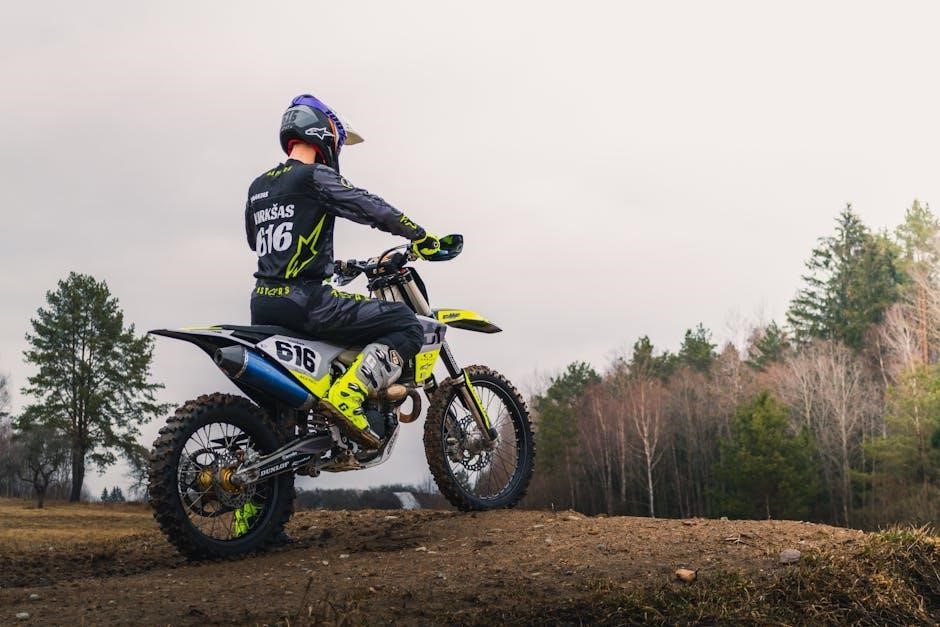
Maximize muddy terrain performance by adjusting suspension settings and tire pressure. Fine-tune throttle response for smoother acceleration. Check the chain tension and oil it regularly for efficient power delivery.Upgrade to lightweight components for better handling and speed in off-road conditions.
Maximizing Performance on a Manual Dirt Bike
Optimize your manual dirt bike’s performance by adjusting suspension settings for better stability and control. Proper tire pressure and tread patterns enhance traction on varying terrains. Master manual shifting techniques for seamless gear transitions during rides. Fine-tune exhaust systems and air filters to improve power delivery. Check and adjust chain tension regularly to prevent slippage and ensure efficient power transfer. Invest in lightweight components to reduce weight and boost acceleration. Experiment with different riding techniques to maximize speed and agility on trails. Combine these strategies to elevate your riding experience on manual dirt bikes.
Tuning the Engine for Better Performance
To tune your manual dirt bike’s engine for peak performance, ensure the air filter is clean and free of debris. Replace worn spark plugs with the correct type specified in the manual. Adjust the carburetor settings for optimal fuel-air mixture, improving power and fuel efficiency. Check and replace dirty or old oil to enhance engine lubrication. Inspect the clutch and transmission for wear, ensuring smooth gear shifts and power delivery. Regularly monitoring these components can significantly boost performance and longevity. Refer to your bike’s manual for specific tuning guidelines tailored to your model, and consider advanced adjustments if you’re confident in your mechanical skills.
Upgrading Components for Enhanced Rider Experience
Enhancing your manual dirt bike’s performance starts with upgrading key components. Swap out the stock suspension for a higher-quality setup, ensuring better handling and comfort. Upgrade your brakes for improved stopping power, especially on technical trails. Install wider, high-traction tires for greater grip in muddy or loose conditions. Replace the exhaust system with a more efficient one to boost power and reduce weight. Additionally, consider upgrading the handlebars and grips for a more ergonomic and secure feel. Always ensure upgrades are compatible with your bike’s specifications and consult a professional if you’re unsure. These upgrades translate to a safer, faster, and more enjoyable ride. Regularly reviewing your bike’s manual will also help you understand which upgrades are feasible and necessary for your riding style.

Riding Techniques for Manual Dirt Bikes
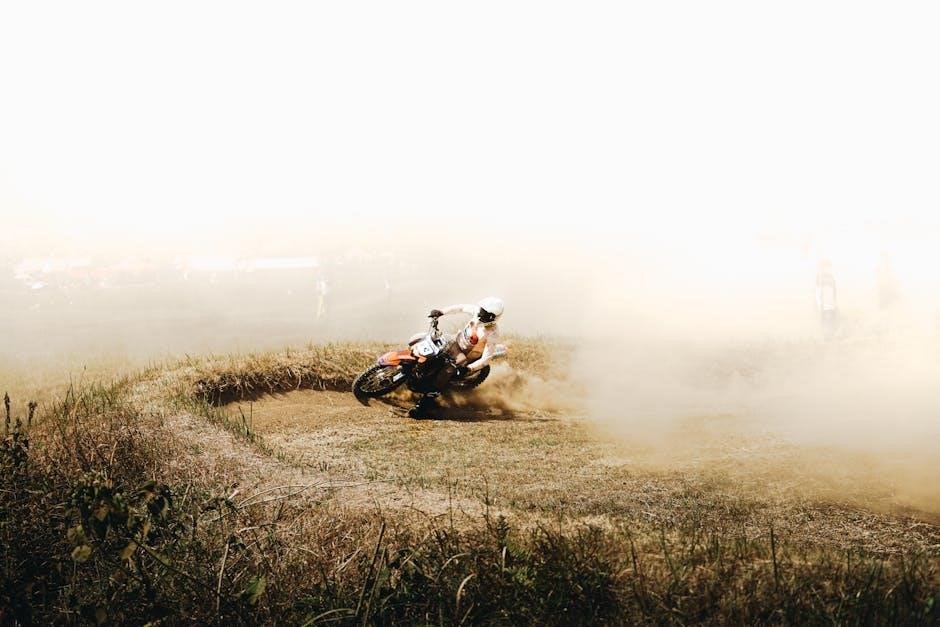
Mastering gear shifting and maintaining balance are crucial for manual dirt bike control. Focus on smooth acceleration and braking to handle varied terrain efficiently. Improve cornering by leaning the bike appropriately and using the throttle to adjust grip. Always prioritize safety and adapt your riding style to the trail conditions.
Basic Riding Techniques for Manual Dirt Bikes
For manual dirt bikes, mastering gear shifting and body positioning is essential. Learn to accelerate smoothly and brake evenly to maintain control. When ascending or descending, adjust your weight for balance. Practice cornering by leaning the bike and using the throttle to maintain traction. Start with easy trails and gradually build confidence. Always prioritize safety and focus on maintaining control in varying terrain conditions.
Advanced Techniques for Experienced Riders
Experienced riders can adopt eco-friendly riding practices to reduce the impact of dirt biking on nature. Avoid sensitive areas like wetlands or slopes prone to erosion. Stick to designated trails and control your speed to minimize soil disturbance. Proper maintenance ensures your bike runs efficiently, reducing emissions. By being mindful of your surroundings, you can enjoy dirt biking responsibly while preserving natural areas for future riders.
Safety Tips for Riding Manual Dirt Bikes
When riding a manual dirt bike, prioritize safety by wearing protective gear: helmet, goggles, jacket, gloves, pants, and boots. Ensure your bike is properly maintained and equipped with functioning brakes and tires. Avoid risky areas like steep slopes or unstable ground. Always plan your route, carry a first-aid kit, and inform someone of your plans; Stay alert to weather conditions and adjust your speed accordingly. Inspect your bike for wear and tear before each ride to prevent mechanical failure while on the trail.

Converting Automatic to Manual Transmission
Switching from automatic to manual offers better control and RPM management. You can replace the automatic clutch with a manual one and adjust the gear ratios for optimal performance. While conversions improve handling, they require mechanical skills and can be costly. Maintenance costs also rise with manual transmission, making it a significant consideration for riders.
Advantages of Converting to Manual Transmission
Converting an automatic dirt bike to manual offers several advantages, including improved control and performance; Manual transmission allows riders to shift gears precisely, optimizing RPMs for specific conditions. This upgrade enhances handling on rough terrain by providing better acceleration and braking. Manual systems are generally more durable than automatic clutches, reducing long-term wear. Additionally, riders enjoy the tactile engagement and satisfaction of manually shifting gears. Customization options are also wider for manual bikes, allowing riders to tailor performance to their needs. Manual transmission is also more fuel-efficient, offering environmental benefits. Overall, the conversion is a worthwhile investment for serious riders seeking enhanced control and performance.
Steps to Convert Automatic to Manual Transmission
- First, install a manual clutch system, ensuring it fits your bike’s frame and engine specifications.
- Remove the automatic transmission and replace it with a manual transmission unit, securing it properly.
- Adjust the gear ratios to match your riding style and terrain preferences for optimal performance.
- Install a gear shifter and linkage system, ensuring smooth and precise gear changes during operation.
- Test the bike thoroughly on different terrains to ensure the conversion functions correctly and safely.
Converting an automatic dirt bike to manual transmission requires careful planning and execution to maintain the bike’s functionality and enhance its performance. Manual purists will find this upgrade both rewarding and exhilarating.
Cost and Maintenance Considerations
Manual dirt bike conversions can be costly, with components like clutches, transmissions, and shifters adding to the price. Labor costs for assembly and adjustments may also increase expenses. Long-term maintenance involves regular clutch adjustments, belt inspections, and fluid changes to ensure reliability. Eco-conscious riders may find manual bikes more fuel-efficient, reducing operational costs over time. Owners should weigh upfront expenses against long-term savings and performance benefits.
Environmental Impact of Manual Dirt Bikes
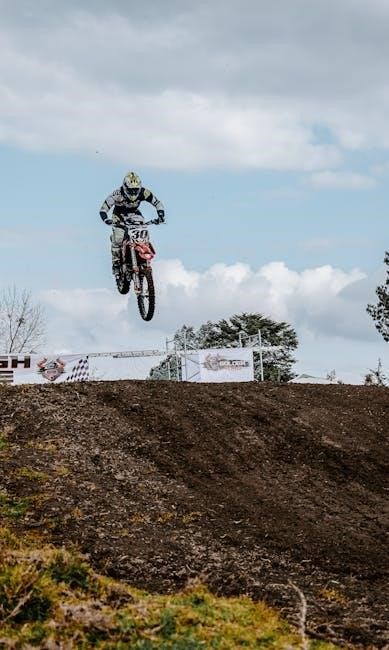
Manual dirt bikes produce emissions that contribute to air pollution and Habitat destruction. Riders must be mindful of noise levels, trail etiquette, and minimizing waste. Eco-friendly practices, such as using sustainable fuels and maintaining bikes properly, can reduce their environmental footprint.
Eco-Friendly Options for Manual Dirt Bikes
Exploring eco-friendly dirt bikes is essential for reducing environmental impact. Electric models, like the X-PRO Storm 150, offer zero emissions. Riders can also opt for converted bikes using cleaner fuels. Lightweight designs reduce fuel consumption, while periodic maintenance ensures efficiency. Eco-friendly practices, such as using sustainable tyres and recycled components, further minimize waste. Riders should prioritize no-dig trails to protect habitats. Upgrading to fuel-efficient engines or hybrid systems can also lower emissions; These options promote responsible dirt biking while preserving nature for future generations.
Reducing the Environmental Impact of Dirt Biking
Minimizing the environmental footprint of dirt biking involves responsible practices. Riders can opt for electric or hybrid bikes like the X-PRO Storm 150 to reduce emissions. Avoiding sensitive ecosystems and sticking to designated trails prevents habitat destruction. Proper maintenance ensures engines run efficiently, lowering fuel waste. Using biodegradable lubricants and tires with low rolling resistance also helps. Riders should carry reusable water bottles to avoid single-use plastics. Upgrading to fuel-efficient engines or eco-friendly components further reduces impact. Promoting awareness and adhering to trail etiquette ensures sustainable dirt biking for future generations.
Best Practices for Responsible Dirt Biking
Responsible dirt biking involves respecting nature, minimizing trail damage, and adhering to local regulations. Always ride within your skill level to prevent accidents. Check and maintain your bike regularly to avoid leaks or damage that could harm the environment. Use trails responsibly, avoiding sensitive areas, and clean up after yourself to leave no trace. Opt for eco-friendly bike modifications, such as fuel-efficient engines, to reduce your carbon footprint. Educate yourself about local wildlife and habitats to preserve ecosystems. Lastly, support conservation efforts and share your knowledge with fellow riders to promote sustainable dirt biking.

The Role of Manuals in Dirt Bike Maintenance
User manuals are essential for proper care and maintenance. They provide detailed instructions for troubleshooting and repairs. Always refer to the manual to locate and download it online. Follow guidelines to keep your bike in top condition and extend its lifespan.
Importance of User Manuals for Dirt Bikes
User manuals are indispensable for dirt bike owners, offering critical information for safe and efficient operation. They provide detailed guidance on troubleshooting, maintenance, and care. Manuals help riders understand their bike’s unique features, performance capabilities, and safety boundaries. Referencing a manual ensures riders can address issues promptly and maintain their bike’s longevity. Always consult the manual before making any modifications or repairs. For example, the X-PRO Storm 150’s manual includes essential details for optimal performance and durability.
How to Locate and Download Dirt Bike Manuals
Locating and downloading dirt bike manuals is straightforward. Start by searching online using the bike’s model or brand. Websites like ManualsLib offer a wide range of free PDF manuals, making them easily accessible. Simply enter the bike name or model in the search field. Manuals can be read online or downloaded for offline use. Some platforms, like ManualsLib, host millions of free manuals, including dirt bike guides. Manuals are typically formatted for easy reading and often include detailed diagrams. Remember to check the date of the manual to ensure it’s up-to-date. For example, the X-PRO Storm 150 manual is available online, providing essential maintenance and operation details.
Using Manuals for Troubleshooting and Repairs
Using dirt bike manuals for troubleshooting and repairs is essential for maintaining optimal performance. Manuals provide detailed instruction for diagnosing issues like engine problems or transmission malfunctions. Begin by identifying the symptom, then consult the manual’s troubleshooting section for potential causes. Follow the step-by-step repair procedures, referencing included diagrams for guidance. Manuals also offer tips for routine maintenance, helping prevent future issues. Always ensure you have the latest version of the manual to stay updated with manufacturer recommendations and safety guidelines.
The Future of Manual Dirt Bikes
Manual dirt bikes are evolving with advanced tech, offering improved performance and reliability. Electric-powered options are emerging, reducing emissions while maintaining the thrill of manual control. Innovation in design and materials ensures a sustainable future for dirt biking enthusiasts. Stay tuned for exciting developments in this dynamic category!
Trends in Manual Dirt Bike Technology
Modern manual dirt bikes are embracing lighter materials and advanced suspension systems for better performance and rider comfort. Electric-powered options are gaining traction, offering eco-friendly alternatives with instant torque. Manual transmissions are being paired with cutting-edge engine designs, such as the X-PRO Storm 150’s 4-speed setup. Eco-conscious riders are also adopting hybrid models, combining traditional dirt bike elements withelectric innovations. These trends ensure manual dirt bikes remain fun and accessible while embracing sustainable practices.
The Rise of Electric Manual Dirt Bikes
Electric manual dirt bikes are revolutionizing the dirt biking world, offering a sustainable and powerful alternative to traditional engines. These bikes combine manual transmission with electric power, providing instant torque and minimal emissions._models like the X-PRO Storm 150 showcase this trend, blending eco-friendliness with high performance. Riders appreciate the reduced environmental impact and the ability to enjoy riding without compromising on fun. Electric dirt bikes are also increasingly road-legal, making them versatile for various terrains. This shift toward electric power marks a exciting new chapter in dirt bike technology.
Impact of Automation on Manual Dirt Bikes
Automation is reshaping the dirt bike industry, introducing new technologies that enhance performance and reduce manual labor. Features like auto-clutch systems and electric starters are becoming more common, making manual dirt bikes easier to use without sacrificing control. This shift allows riders to enjoy the benefits of automation while still experiencing
Manual dirt bikes offer thrilling control and customization, making them a favorite for riders seeking an authentic off-road experience. Their ability to adapt to various environments ensures lasting appeal, blending tradition with modern advancements. Whether for leisure or competition, these bikes continue to inspire passion and skill among dirt bike enthusiasts worldwide.
The Appeal of Manual Dirt Bikes
Manual dirt bikes offer a unique connection between rider and machine, allowing for precise control and customization. Riders appreciate the ability to manually shift gears, providing a tactile experience that enhances performance and adaptability on varying terrains. The flexibility of manual transmissions also enables riders to optimize engine output for specific conditions, making them a favorite among enthusiasts. Additionally, the simplicity and reliability of manual systems appeal to those who value mechanical engagement over automation, ensuring these bikes remain a thrilling choice.
Final Thoughts on Manual Dirt Bike Ownership
Manual dirt bike ownership offers a rewarding yet challenging experience, combining mechanical engagement and thrilling on-road performance. Riders enjoy the direct connection with the machine, fostering growth and skill development. However, it requires dedication to maintenance and a willingness to learn. Budget-friendly options like the X-PRO Storm 150 make manual dirt bikes accessible, while eco-friendly practices help reduce their environmental impact. As technology evolves, manual dirt bikes remain a timeless choice for enthusiasts seeking authenticity and control. Ultimately, ownership of a manual dirt bike is a fulfilling investment for those willing to embrace its demands.
Encouragement for New Riders
Embarking on the journey of manual dirt bike ownership is an exciting yet challenging endeavor. As a new rider, embrace the learning curve with patience and determination. Mastering gear shifting and machine control will enhance your skills and confidence. Start with budget-friendly options like the X-PRO Storm 150 and gradually build your expertise. Remember, perseverance and passion will transform challenges into triumphs. Embrace every ride as an opportunity to grow, and soon, you’ll enjoy the thrilling freedom that manual dirt biking offers. The effort you invest will reward you with unforgettable experiences on the trail.