Denture Teeth Mold Guide: A Comprehensive Overview
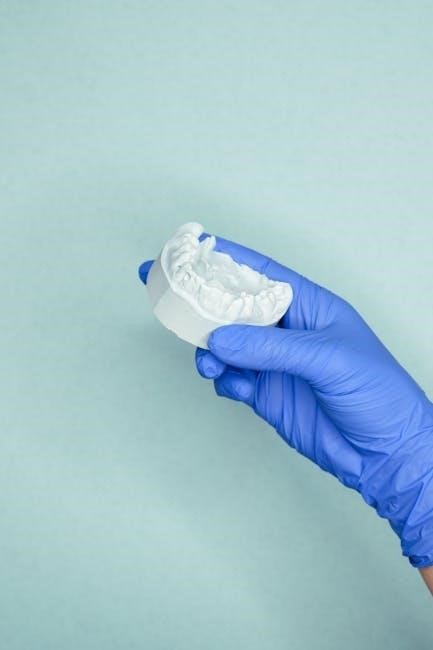
Creating dentures involves precise molds for optimal fit and function, utilizing impressions and measurements of dental structures.
A wax appliance aids in initial try-ins, while plaster facilitates reverse image creation for acrylic processing and long-term stability.
Understanding the Importance of Accurate Denture Molds
Achieving a comfortable and functional denture relies heavily on the accuracy of the initial molds. These molds serve as the foundational blueprint for the entire prosthetic, directly impacting fit, retention, stability, and ultimately, the patient’s quality of life. A precise impression captures the unique contours of the patient’s oral tissues, ensuring the denture base conforms perfectly to the underlying anatomy.
Inaccurate molds can lead to a host of problems, including poor fit, sore spots, difficulty chewing, and even speech impediments. The more detailed the mold, the better the dentures will fit, as noted by dental professionals. Furthermore, accurate measurements of bite and gum ridge alignment, taken concurrently with the impression, are crucial for proper jaw relationship and aesthetic outcomes. Essentially, the mold isn’t just about capturing shape; it’s about replicating the entire oral environment for a successful denture.
Initial Consultation and Assessment
The first step in the denture creation process is a comprehensive consultation and assessment. This involves a thorough examination of the patient’s oral health, including teeth, gums, and supporting structures. Dentists evaluate the patient’s bite, noting how the upper and lower teeth align, and assess the condition of the gum ridges. This assessment helps determine the feasibility of dentures and identifies any potential challenges.
During this phase, the dentist will discuss the patient’s expectations, lifestyle, and medical history to tailor the denture design accordingly. Crucially, the dentist will also begin to determine the most suitable shade of denture teeth, considering the patient’s skin tone and facial features. Measurements of the dental structure are taken, and notes are made on the bite and gum ridge alignment, all contributing to a personalized treatment plan. This initial assessment lays the groundwork for accurate impressions and a successful denture outcome.
Taking Preliminary Impressions
Preliminary impressions are the foundational step in capturing the unique contours of a patient’s mouth. The purpose of these initial molds is to create a replica of the oral tissues, serving as a base for subsequent, more detailed impressions. Accuracy at this stage is paramount, as it directly impacts the fit and comfort of the final dentures. Dentists utilize various materials to achieve this, carefully adapting them to the patient’s oral cavity.
These first impressions aren’t intended to be the final molds, but rather a starting point. They provide a general outline of the oral structures. Often, a wax appliance is provided for the patient to bite into, assisting in capturing the correct jaw relationship. This preliminary step allows for adjustments and refinements before proceeding to more precise impression techniques, ensuring a stable and retentive denture base.
Materials Used for Preliminary Impressions
Historically, impression wax was a cornerstone material for preliminary denture impressions, prized for its ability to be reheated and reshaped. This characteristic allows for a technique called “border molding,” where the edges of the impression are customized to precisely fit the patient’s unique oral anatomy, enhancing denture retention. While largely superseded by more advanced materials for final impressions, wax remains valuable for this initial, adaptable stage.
Modern dentistry also employs alginate, a seaweed-derived material, for preliminary impressions. Alginate is favored for its ease of use, relatively low cost, and ability to capture sufficient detail for initial assessments. However, its dimensional stability is limited, necessitating prompt pouring of the impression with plaster to create a positive model. The choice of material depends on the dentist’s preference and the specific clinical needs of the patient.
Creating a Wax Appliance for Try-In
Following preliminary impressions, a wax appliance is meticulously crafted as a crucial intermediate step in the denture creation process. This appliance, built on the initial impression, serves as a temporary representation of the final dentures, allowing both the dentist and patient to visualize and assess the fit, aesthetics, and bite relationship. The patient is typically asked to “bite into” this wax form, enabling the dentist to observe how the upper and lower dentures interact.
This try-in phase is vital for making necessary adjustments to tooth positioning, ensuring proper support from the gums, and verifying the overall comfort and appearance. It’s a dynamic process, allowing for modifications before the irreversible transition to the final acrylic dentures. Careful observation during this stage significantly contributes to a successful and satisfying outcome for the patient.
Bite Registration and Measurements
Accurate bite registration and precise measurements are fundamental to successful denture fabrication, ensuring proper jaw alignment and functional occlusion. Dentists meticulously record how the upper and lower teeth come together, capturing the patient’s unique bite pattern. This is often achieved using wax rims or other specialized materials that allow for a clear visualization and recording of the bite relationship.
Beyond bite registration, comprehensive measurements of the dental structure and gum ridges are taken. These measurements provide critical data for creating a denture base that conforms precisely to the patient’s oral anatomy, maximizing stability and retention. Simultaneously, the dentist will discuss and determine the most aesthetically pleasing denture tooth shade, considering the patient’s complexion and preferences, contributing to a natural-looking smile.
Determining Denture Tooth Shade
Selecting the appropriate denture tooth shade is a crucial aesthetic consideration, significantly impacting the natural appearance of the final restoration. Dentists carefully evaluate each patient’s unique complexion, skin tone, and existing tooth color (if any remain) to guide shade selection. This process often involves utilizing shade guides – a range of artificial teeth in varying hues – to visually match the desired shade.
The goal is to achieve a harmonious blend between the dentures and the patient’s facial features, avoiding a stark or unnatural look. Factors like age and personal preference also play a role; some patients may prefer a brighter, more youthful shade, while others may opt for a more subdued, natural tone. Careful consideration ensures the dentures complement the patient’s overall appearance and boost their confidence.
Refining the Impression: Border Molding
Border molding is a vital technique used to enhance the accuracy and fit of denture impressions, particularly during the preliminary stages of fabrication. This process involves utilizing materials that can be reheated and reshaped, allowing for customization of the impression’s periphery to closely adapt to the patient’s unique oral anatomy.
By carefully adjusting the borders of the impression, clinicians can ensure better denture retention and stability. While largely superseded by advanced materials for final impressions, border molding remains a valuable tool for this specific refinement step. It allows for precise capture of the soft tissue undercuts and muscle attachments, resulting in a more comfortable and secure denture base. This meticulous approach minimizes issues with denture movement and improves overall patient satisfaction.
Laboratory Procedures: From Impression to Model
The transition from initial impression to a workable model is a crucial phase in denture creation, demanding precision and careful execution within the dental laboratory. A key step involves meticulously covering the wax denture with laboratory plaster. This plaster serves as a rigid outer shell, providing support during subsequent processes;
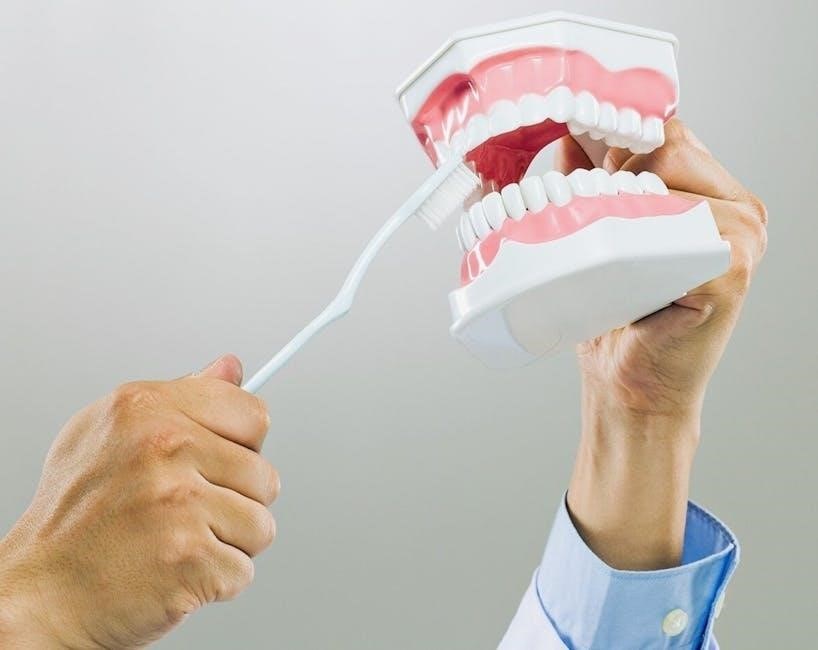
Once the plaster fully hardens, the wax is carefully softened using boiling water. This allows for its removal, creating a precise negative space – a reverse image – within the plaster. The denture teeth remain securely positioned during this process, ensuring their accurate placement in the final prosthesis. This plaster model then becomes the foundation for further fabrication, enabling the replication of the patient’s oral structures with exceptional detail and accuracy, ultimately leading to a well-fitting denture.
Covering the Wax Denture with Plaster
Encasing the wax denture in laboratory plaster is a pivotal step, transforming a flexible form into a stable, rigid structure suitable for further processing. This procedure ensures the accurate reproduction of the denture’s shape and the precise positioning of the teeth during subsequent stages. The plaster acts as a protective shell, preventing distortion and maintaining the integrity of the wax form.
Dental technicians carefully apply the plaster, ensuring complete coverage of the wax denture, including all intricate details. Proper mixing ratios and application techniques are vital to avoid air bubbles or inconsistencies that could compromise the final model. Once applied, the plaster is left to harden completely, creating a durable mold ready for wax removal and the creation of a reverse image, ultimately facilitating the acrylic processing phase.
Creating a Reverse Image in Plaster
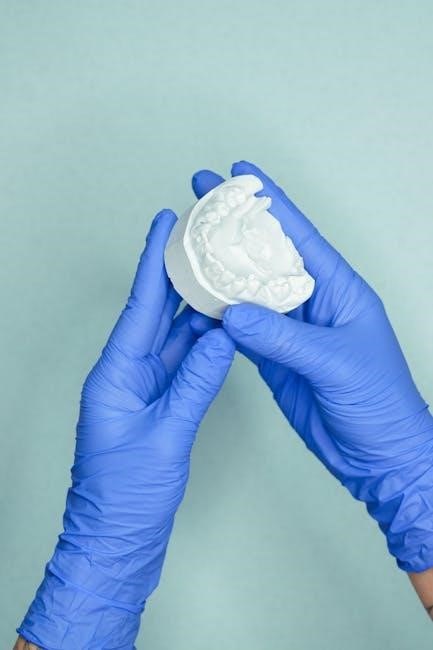
Following plaster hardening, a crucial step involves generating a reverse image – a precise negative replica of the original wax denture. This is achieved by carefully softening the wax using boiling water, allowing its removal without disturbing the securely positioned denture teeth. The softened wax is then meticulously flushed away, leaving behind a hollow impression within the hardened plaster.
This hollow space accurately mirrors the shape of the denture, including the contours of the gum line and the arrangement of the teeth. This plaster model serves as the foundation for building the final denture base. It’s a detailed, negative imprint from which a precise model, or positive reproduction, of the patient’s mouth can be created. This process ensures the new denture will perfectly fit the patient’s unique oral anatomy.
Flasking and Acrylic Processing
Once the reverse image in plaster is achieved, the next phase involves flasking – encasing the plaster mold within a metal flask. This flask provides support and containment during the acrylic processing stage. Specialized presses are then utilized to carefully press acrylic material into the mold contained within the flask, ensuring it fills every contour and detail of the denture’s future base.
Subsequently, the flask is securely clamped shut, and heat is applied. This heat curing process is vital, as it allows the acrylic to completely replicate the gum material with exceptional accuracy. The heat initiates a chemical reaction, solidifying the acrylic and permanently forming the denture base around the teeth. This meticulous process guarantees a durable and aesthetically pleasing final product, mirroring the patient’s oral anatomy.
Pressing Acrylic into the Mold
After the wax denture is meticulously covered with laboratory plaster and the wax is removed, a crucial step begins: pressing acrylic into the resulting mold. This isn’t a simple pouring process; specialized dental presses are employed to apply controlled pressure, ensuring the acrylic material flows uniformly into every crevice and detail of the mold. This precise application is paramount for capturing the exact contours of the future denture base.
The acrylic, in its initial form, is carefully positioned and then subjected to the pressing force. This technique minimizes air bubbles and guarantees complete adaptation to the plaster mold, replicating the gum material with remarkable fidelity. Proper pressure and timing are essential to avoid distortion or incomplete filling, ultimately impacting the fit and comfort of the final dentures.
Heat Curing the Acrylic
Following the meticulous pressing of acrylic into the mold within the flask, the next critical phase is heat curing. The flasks, now containing the acrylic-filled molds, are securely clamped together to maintain precise alignment during the curing process. This clamping prevents any warping or dimensional changes that could compromise the denture’s fit.
Heat is then applied in a carefully controlled manner, typically using a water bath or specialized curing unit. This heat initiates a chemical reaction within the acrylic, causing it to polymerize – essentially hardening and solidifying into a durable, stable material. The duration and temperature of the heat curing cycle are precisely calibrated based on the specific type of acrylic used, ensuring complete polymerization and optimal physical properties. This process allows the acrylic to replicate the gum material exactly.
Denture Base Materials and Their Properties
The foundation of any denture lies in its base material, traditionally acrylic resin, chosen for its versatility and aesthetic qualities. Acrylic offers a good balance of strength, durability, and ease of processing, allowing for accurate replication of gum tissues. However, various acrylic formulations exist, each possessing unique properties impacting the final denture’s performance.
Factors like impact resistance, flexibility, and thermal conductivity are crucial considerations. Modern materials also explore alternatives like nylon-based resins, offering enhanced flexibility and comfort, particularly for patients with sensitive oral tissues. The selected material must be biocompatible, non-toxic, and resistant to staining and fracture. Understanding these properties is vital for creating a denture base that provides optimal support, stability, and a natural appearance, contributing significantly to patient satisfaction.
Digital Denture Mold Technology
The advent of digital technology has revolutionized denture fabrication, offering a precise and efficient alternative to traditional methods. Digital impressioning utilizes intraoral scanners to capture detailed 3D images of the patient’s mouth, eliminating the need for messy impression materials. This data is then used to create a virtual model, allowing for accurate design and fabrication of the denture base and teeth.
Digital workflows streamline the process, reducing chair time and minimizing errors. The resulting dentures exhibit superior fit, comfort, and aesthetics. Furthermore, digital records facilitate easy storage, retrieval, and potential future modifications. This technology represents a significant advancement in denture dentistry, enhancing both the clinician’s workflow and the patient’s overall experience, paving the way for more predictable and satisfying outcomes.
Advantages of Digital Impressioning
Digital impressioning presents numerous benefits over conventional methods, significantly improving the denture creation process. Eliminating physical impressions reduces patient discomfort and eliminates the potential for distortion associated with traditional materials. The resulting digital models are incredibly accurate, enabling precise denture design and fabrication, leading to a superior fit and enhanced retention.
Workflow efficiency is dramatically increased, with faster turnaround times and reduced laboratory remakes. Digital records are easily stored and shared, facilitating collaboration between dentists and dental technicians. Moreover, digital technology allows for virtual try-ins and adjustments, optimizing the final result before physical fabrication. Ultimately, digital impressioning enhances both the quality of dentures and the overall patient experience, offering a modern and reliable solution.
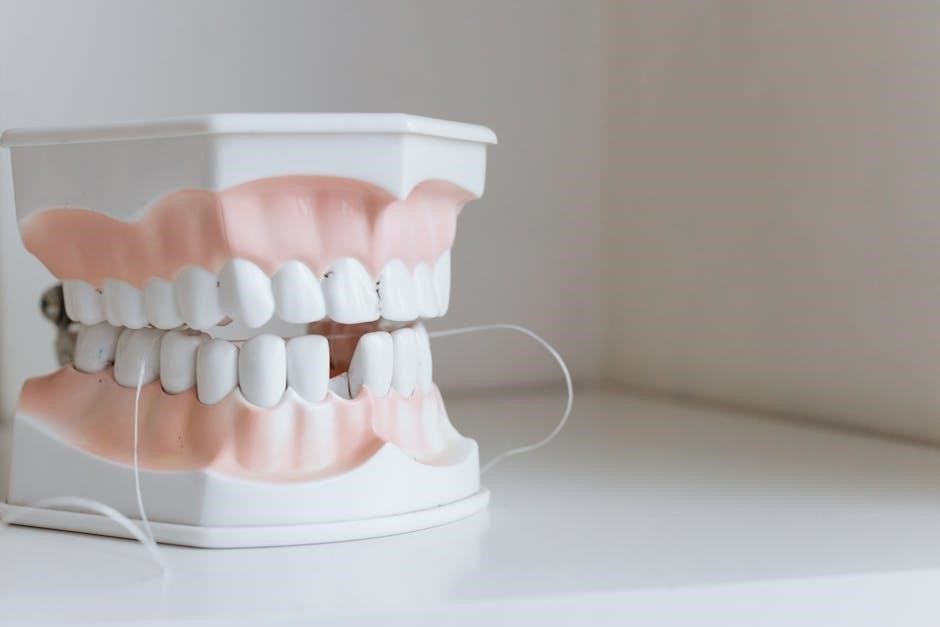
Traditional vs. Digital Mold Techniques
Traditional denture mold techniques rely on physical impressions using materials like alginate or impression plaster. These methods, while established, can be prone to distortion during handling and pouring of the model. They require significant skill and experience to achieve accurate results, and patient comfort can be compromised due to the material’s consistency and setting time.
Digital techniques, conversely, employ intraoral scanners to capture a direct digital impression of the patient’s mouth. This eliminates the need for messy materials and reduces the risk of distortion. Digital models offer superior precision and allow for immediate visualization and analysis. While the initial investment in digital equipment is higher, the long-term benefits – including improved accuracy, efficiency, and patient satisfaction – often outweigh the costs. Both methods aim for the same goal: a precise mold for a well-fitting denture.
Common Issues with Denture Molds and Solutions
A frequent challenge is poor denture retention, often stemming from inaccurate border molding or insufficient adaptation to the patient’s unique anatomy. This can be addressed by refining the impression’s periphery, ensuring a complete seal against the oral tissues. Another issue involves dimensional changes during the impression process or model creation, leading to a misfit. Careful material selection and precise laboratory procedures are crucial to minimize these distortions.
Additionally, patients with limited mouth opening or prominent anatomical features can present difficulties in obtaining a complete impression. Utilizing specialized impression trays and employing techniques like selective pressure can overcome these obstacles. Regular follow-up appointments and adjustments are essential to address any ongoing issues and ensure long-term denture stability and patient comfort.
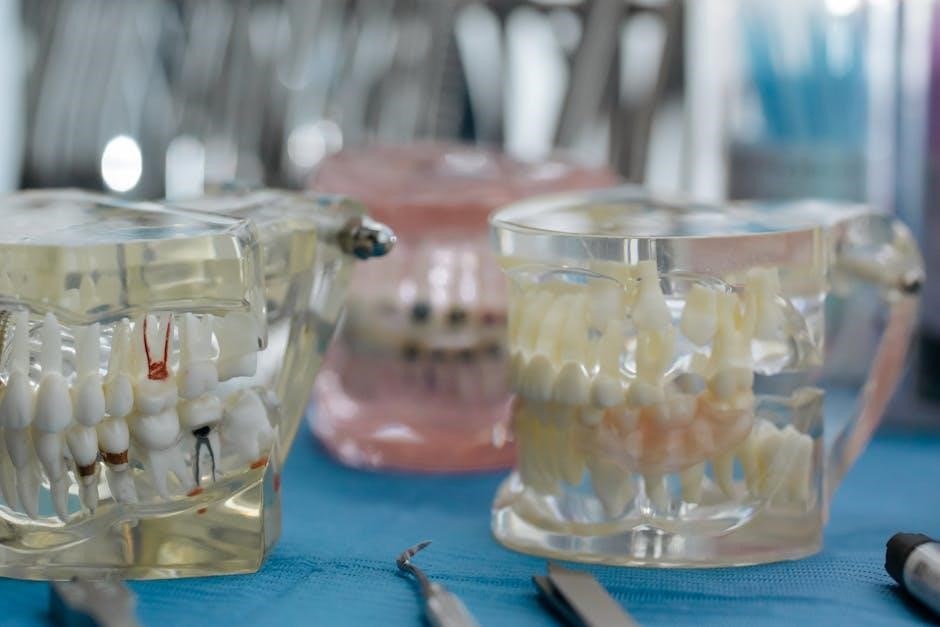
Addressing Poor Retention
Poor denture retention frequently arises from an inadequate impression, failing to capture the full extent of the supporting tissues. Border molding, a technique involving reheating and reshaping the impression material, allows for customization to the patient’s anatomy, enhancing its seal. This process focuses on extending the impression’s periphery to accurately record the vestibular depth and muscle attachments.
If retention issues persist, evaluating the denture base material is vital; certain materials offer superior adhesion. Adjustments to the denture’s fitting surface may also be necessary, relieving pressure points and improving stability. Furthermore, assessing the patient’s oral hygiene and tissue health is crucial, as inflammation or bone resorption can compromise retention. In some cases, relining the denture with a new base material can restore a proper fit and improve retention significantly.
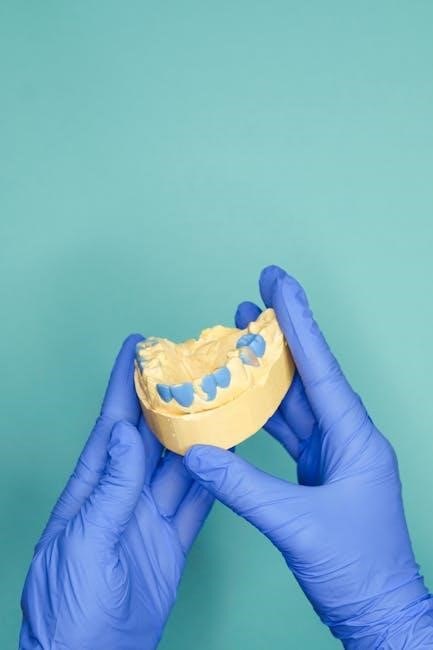
The Role of Dental Anatomy in Mold Creation
Accurate denture mold creation fundamentally relies on a thorough understanding of dental anatomy. The shape and alignment of residual teeth, alveolar ridges, and soft tissues dictate the impression’s form. Precise recording of these structures ensures proper support, retention, and stability of the final denture.
Detailed negative imprints, capturing the contours of the mouth, are essential for creating a positive reproduction – a precise model. This model mirrors the patient’s oral cavity, guiding the fabrication process. Variations in ridge height, tissue resilience, and muscle attachments must be meticulously considered during impression taking and border molding. Ignoring anatomical nuances can lead to ill-fitting dentures, causing discomfort and functional limitations. Therefore, a comprehensive anatomical assessment is paramount for successful denture fabrication.
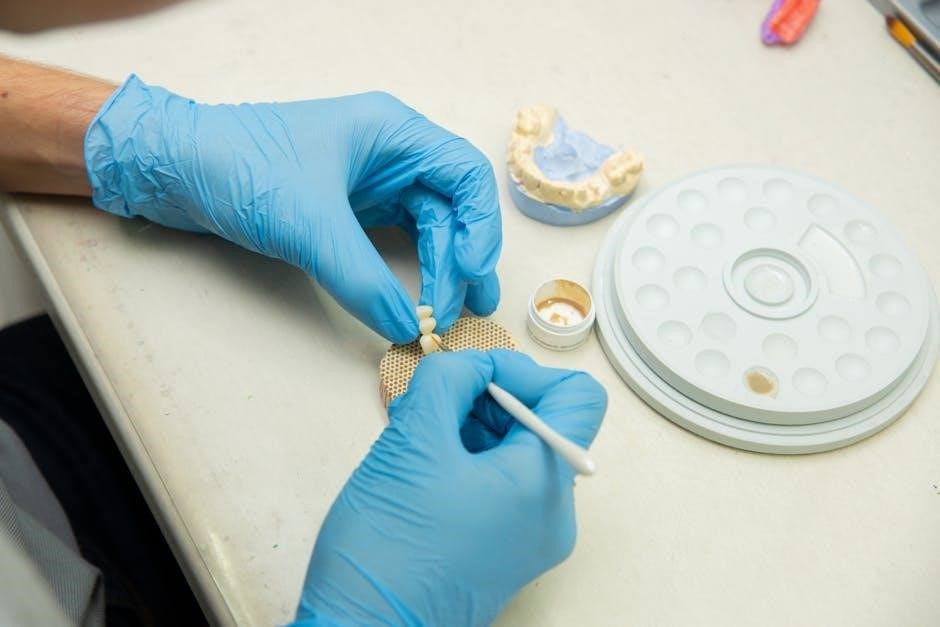
Positive Reproduction: Creating a Model of the Mouth
Following the initial impression, a positive reproduction – a precise model of the patient’s mouth – is generated. This crucial step transforms the negative imprint into a tangible form, serving as the foundation for denture construction. Typically, this involves pouring dental plaster into the impression, effectively creating a reverse copy of the oral tissues.
The plaster hardens, faithfully replicating the anatomical contours captured during impression taking. This model allows the dental technician to visualize the patient’s oral cavity and plan the denture’s design. Accurate positive reproduction is vital for ensuring proper tooth positioning, bite alignment, and overall denture fit. Any inaccuracies in this model will directly translate to issues with the final prosthesis, highlighting the importance of meticulous technique and material selection during the model creation process.
Final Denture Fitting and Adjustments
The final denture fitting is a critical stage, evaluating the prosthesis’s adaptation and function within the patient’s mouth. This involves a thorough assessment of retention, stability, and occlusion – how the upper and lower teeth come together. The patient is asked to perform various movements, like speaking and swallowing, to identify any areas of discomfort or interference.
Adjustments are then meticulously made to address any identified issues. This may involve relieving pressure spots, refining the bite, or altering the denture base to improve stability. Proper adjustments are essential for ensuring patient comfort and preventing sores or irritation. The dentist will provide instructions on denture insertion, removal, and care, emphasizing the importance of regular check-ups to monitor fit and address any long-term changes.
Post-Denture Care and Maintenance
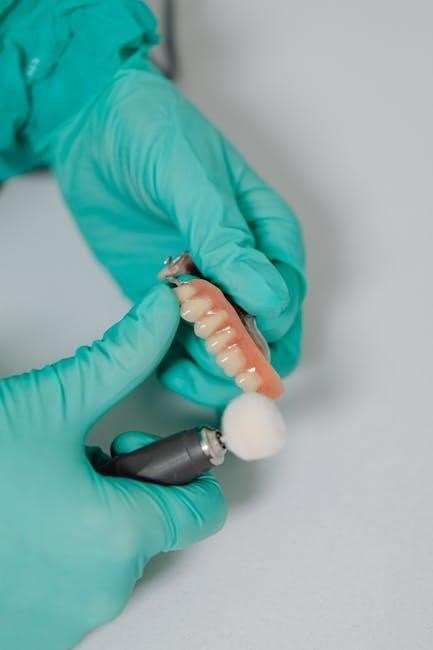
Proper post-denture care is paramount for longevity and maintaining oral health. Dentures require daily cleaning to remove food particles, plaque, and stains, utilizing a specialized denture brush and non-abrasive denture cleanser. Avoid using regular toothpaste, as it can damage the acrylic. Soaking dentures overnight in a denture-cleaning solution helps maintain their shape and prevents dryness.
Regular dental check-ups are crucial – typically every six months – to assess denture fit, check for any tissue irritation, and professionally clean the dentures. Patients should report any discomfort or changes in fit immediately. Handling dentures with care during insertion and removal prevents breakage. Maintaining good oral hygiene, even without natural teeth, is vital for gum health and overall well-being, ensuring the dentures continue to function effectively.
Long-Term Considerations for Denture Mold Stability
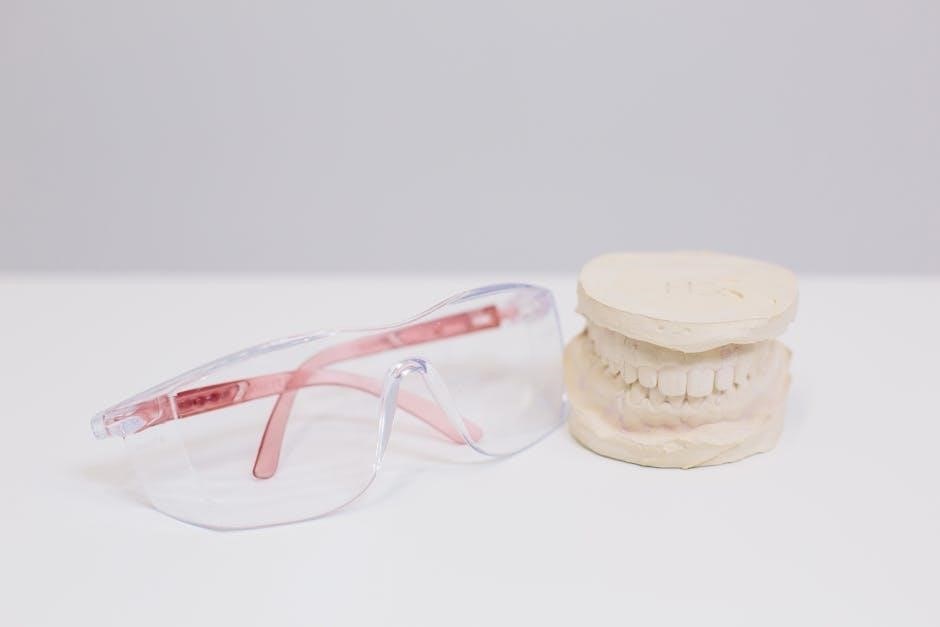
Maintaining denture mold stability over time requires understanding potential changes in the oral cavity. Bone resorption, a natural process after tooth loss, can alter the denture’s fit, leading to looseness and discomfort. Regular adjustments by a dentist are essential to address these changes and ensure continued proper support and retention.
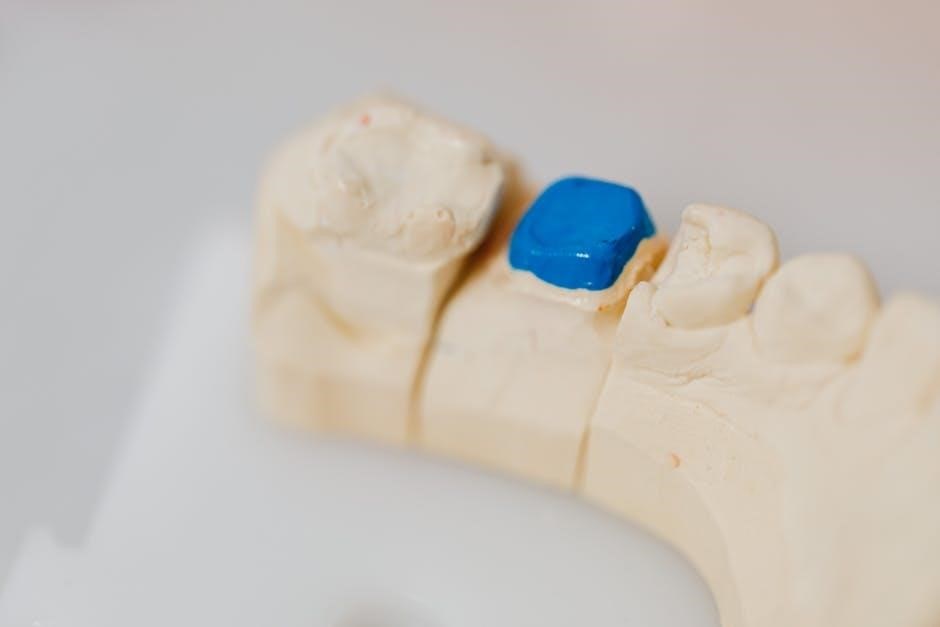
Factors like diet and oral hygiene significantly impact stability. Avoiding hard or sticky foods minimizes stress on the dentures, while diligent cleaning prevents the buildup of debris that can contribute to tissue irritation and bone loss. Digital denture technology offers potential advantages in long-term stability through precise initial molds and easier adjustments. Monitoring for signs of wear or damage and promptly seeking professional care are crucial for maximizing denture lifespan and maintaining optimal oral function.