Understanding your 2006 CR-V is key; access manuals via Internet Archive or purchase an OEM handbook on Amazon for comprehensive guidance and optimal vehicle use.
Importance of the Owner’s Manual
The 2006 Honda CR-V owner’s manual is an invaluable resource, providing essential information for safe and efficient vehicle operation. It details everything from basic controls and maintenance schedules to troubleshooting common issues. Accessing a copy, whether downloaded from the Internet Archive in formats like PDF or EPUB, or purchased as an OEM handbook, ensures you understand your vehicle’s features.
Properly utilizing the manual helps maximize performance, prevent costly repairs through preventative maintenance, and ensures adherence to safety guidelines. It clarifies the function of gauges, indicators, and safety systems like airbags and seatbelts. Understanding these aspects contributes to a more enjoyable and secure driving experience with your 2006 CR-V.
Where to Find a 2006 Honda CR-V Owner’s Manual
Locating a 2006 Honda CR-V owner’s manual is readily achievable through several avenues. The Internet Archive offers free download options in various formats – PDF, EPUB, DAISY, and even full text – catering to diverse user needs, including accessibility features for print disabilities. Alternatively, a genuine OEM handbook can be purchased directly from Amazon.com, ensuring an original copy.
These resources provide comprehensive documentation, with the Internet Archive listing a 271-page manual scanned at 300 DPI. Choosing the right source depends on preference; digital access offers convenience, while a physical copy provides a tangible reference guide for your 2006 CR-V.

Vehicle Identification
Properly identifying your CR-V relies on the Vehicle Identification Number (VIN), crucial for service, warranty work, and understanding vehicle-specific certifications.
Vehicle Identification Number (VIN) Location
Locating your 2006 Honda CR-V’s Vehicle Identification Number (VIN) is essential for various reasons, including vehicle history reports, warranty claims, and potential theft recovery. The VIN is a unique 17-character code specific to your vehicle.
On the 2006 CR-V, you can find the VIN in several places: on the driver’s side dashboard, visible through the windshield, and on the driver’s side doorjamb. Additionally, the VIN is typically located on your vehicle registration and insurance documents.
Confirming the VIN’s accuracy is vital when ordering parts or seeking service, ensuring compatibility and correct information for your specific CR-V model.
Understanding Vehicle Labels and Certifications
Your 2006 Honda CR-V features several important labels and certifications providing crucial information about the vehicle’s manufacturing and compliance. These labels detail specifications, safety standards, and environmental impact.
Look for the Monroney sticker (window sticker) which originally outlined the vehicle’s MSRP, fuel economy, and standard features. Additionally, certification labels indicate adherence to U.S. safety and emissions regulations.
Understanding these labels helps you interpret your CR-V’s capabilities and ensures it meets required standards. These certifications demonstrate Honda’s commitment to quality, safety, and environmental responsibility for your vehicle.
Operating Your Vehicle
The owner’s manual details essential operating procedures, including starting, stopping, and understanding gauges; ensuring safe and efficient use of your 2006 Honda CR-V.
Starting and Stopping the Engine
Proper engine operation is crucial for longevity and performance. The 2006 Honda CR-V owner’s manual provides detailed instructions for safely starting and stopping the engine. It outlines the correct key insertion procedure, ensuring the vehicle is in Park or Neutral before ignition.
Furthermore, it details the sequence for a smooth start, avoiding unnecessary strain on the starter. The manual also explains the proper shutdown procedure, allowing the engine to cool down correctly and preventing potential issues. Understanding these steps, as outlined in the handbook, contributes to a reliable driving experience and extends the life of your CR-V’s engine. Always refer to the manual for specific details and warnings.
Driving Information – Gauges and Indicators
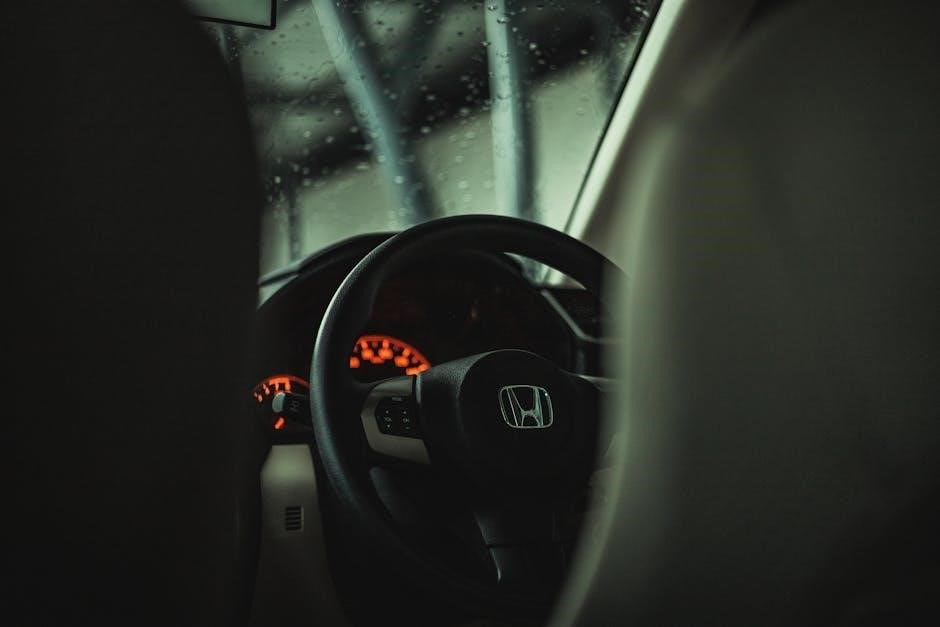
The 2006 Honda CR-V’s instrument panel provides vital information during operation. The owner’s manual thoroughly explains each gauge and indicator, from the speedometer and tachometer to warning lights for oil pressure, coolant temperature, and the check engine system.
Understanding these signals is essential for safe driving. The manual details the meaning of each illuminated icon, differentiating between minor alerts and critical warnings requiring immediate attention. It also clarifies the function of indicators like turn signals, high beams, and the parking brake. Familiarizing yourself with these displays, as described in the handbook, ensures you can respond appropriately to any situation while on the road.
Fueling Your 2006 Honda CR-V
The 2006 Honda CR-V requires unleaded gasoline with an octane rating of 87 or higher for optimal performance. The owner’s manual details the fuel tank capacity, typically around 15.3 gallons, and provides guidance on locating the fuel filler door.
It emphasizes the importance of using the correct fuel type to prevent engine damage. The manual also outlines safe fueling procedures, including avoiding spills and ensuring the fuel cap is securely tightened after each fill-up. Referencing the handbook will help you understand any specific fuel recommendations or warnings related to your vehicle’s engine and emissions systems, ensuring efficient and reliable operation.

Maintenance Schedule
The 2006 CR-V owner’s manual outlines recommended maintenance intervals for fluid checks, replacements, and overall vehicle upkeep, ensuring longevity and reliability.
Recommended Maintenance Intervals
Maintaining your 2006 Honda CR-V requires adherence to a specific schedule, detailed within the owner’s manual, to ensure optimal performance and longevity. Regular inspections are crucial, including checking fluid levels – engine oil, coolant, brake fluid, and power steering fluid – at every oil change.
Oil changes are typically recommended every 5,000 to 7,500 miles, depending on driving conditions. Air filter replacement should occur every 15,000 to 30,000 miles. The engine coolant should be flushed and replaced every 30,000 miles or 5 years, whichever comes first.
Spark plugs require replacement around 100,000 miles, and the timing belt should be inspected and potentially replaced at 100,000 miles as well. Following these intervals, as outlined in the manual, will help prevent costly repairs and maintain your CR-V’s reliability.
Fluid Checks and Replacements
Regularly checking and replacing fluids is vital for the health of your 2006 Honda CR-V. Engine oil should be inspected with each fueling and changed every 5,000-7,500 miles, utilizing the recommended grade specified in the owner’s manual. Coolant levels should be maintained between the minimum and maximum marks on the reservoir.
Brake fluid should be checked periodically for contamination and replaced every two to three years, or as indicated in the maintenance schedule. Power steering fluid levels also require monitoring, and topping off as needed. Transmission fluid should be inspected and changed according to the recommended intervals.
Proper fluid maintenance prevents component wear and ensures smooth operation, contributing to the longevity and reliability of your CR-V. Refer to the owner’s manual for specific fluid types and replacement procedures.

Safety Features
The 2006 CR-V prioritizes occupant protection with an airbag system and seat belts; the owner’s manual details proper usage and maintenance for optimal safety.
Airbag System Information
The 2006 Honda CR-V is equipped with a sophisticated airbag system designed to provide crucial protection during collisions. This system includes front airbags for the driver and front passenger, as well as side curtain airbags offering head protection for both front and rear outboard passengers.
It’s vitally important to consult the owner’s manual for detailed information regarding the airbag system’s operation, limitations, and potential risks. The manual will explain how the system functions in various crash scenarios and highlight the importance of always wearing seat belts in conjunction with airbags.
Proper understanding of the airbag system is essential for maximizing its effectiveness and ensuring your safety. The manual also provides guidance on what to do if the airbag warning light illuminates, indicating a potential system malfunction that requires immediate attention from a qualified Honda technician.
Seat Belt Usage and Maintenance
Proper seat belt usage is paramount for safety in your 2006 Honda CR-V. The owner’s manual emphasizes that seat belts are the primary restraint system and must be worn by all occupants at all times during vehicle operation. It details the correct way to position the shoulder and lap belts for optimal protection.
Regular inspection of seat belts is crucial. Check for any signs of damage, such as fraying, cuts, or loose stitching. The manual provides guidance on cleaning the belts with mild soap and water, avoiding harsh chemicals that could weaken the material.
Understanding the retractor mechanism and how to properly adjust the belts for a snug fit is also covered. The manual stresses that damaged seat belts must be replaced immediately by a qualified technician to maintain the vehicle’s safety standards.

Interior Features
The 2006 CR-V manual details climate control and audio system operation, ensuring comfortable journeys and entertainment for all passengers within the vehicle.
Climate Control System
The 2006 Honda CR-V’s climate control system, as detailed in the owner’s manual, provides heating, ventilation, and air conditioning for passenger comfort. Understanding the controls allows for precise temperature adjustments and airflow direction. The manual explains operation of the fan speed, temperature selection, and mode settings – including defrost and floor modes.
It also covers the recirculation function, which helps to quickly cool or heat the cabin. Proper use of these features ensures efficient climate control and optimal fuel economy. The manual likely includes information on filter replacement to maintain air quality within the vehicle, contributing to a pleasant driving experience for both driver and passengers.
Audio System Operation
The 2006 Honda CR-V’s audio system, explained within the owner’s manual, offers various functionalities for entertainment during your drive. The manual details how to operate the radio, CD player, and any available auxiliary inputs. It clarifies the use of volume controls, tuning knobs, and preset station memory functions.
Information on adjusting sound settings like bass and treble is also included, allowing for personalized audio preferences. The manual likely covers operation of steering wheel-mounted audio controls, if equipped, for convenient access. Understanding these features enhances the driving experience and allows you to fully enjoy your chosen audio sources while maintaining focus on the road.
Troubleshooting Common Issues
The owner’s manual provides guidance for jump-starting and flat tire procedures, essential for resolving typical roadside problems with your 2006 Honda CR-V.
Jump Starting Procedures
Safely jump-starting your 2006 Honda CR-V requires careful adherence to specific procedures outlined in the owner’s manual. First, position a properly functioning vehicle close enough for the jumper cables to reach, avoiding contact between the vehicles. Connect the positive (+) cable to the positive terminal of the discharged battery, then to the positive terminal of the good battery.
Next, connect the negative (-) cable to the negative terminal of the good battery, and finally, to a solid, unpainted metal surface on the disabled CR-V, away from the battery. Start the functioning vehicle and let it run for a few minutes before attempting to start the CR-V. Once started, allow both vehicles to run for a period before disconnecting the cables in the reverse order of connection.
Dealing with a Flat Tire
Addressing a flat tire on your 2006 Honda CR-V necessitates a systematic approach detailed in the owner’s manual. First, safely pull over to a level surface, away from traffic, and activate your hazard lights. Gather the spare tire, jack, and lug wrench. Loosen the lug nuts on the flat tire before jacking up the vehicle.
Position the jack correctly, as indicated in the manual, and raise the vehicle until the flat tire is off the ground. Fully remove the lug nuts and carefully remove the flat tire. Mount the spare tire, tighten the lug nuts by hand, lower the vehicle, and then fully tighten the lug nuts in a star pattern. Finally, check the spare tire’s pressure and have the flat tire repaired or replaced promptly.
Specifications
The 2006 CR-V’s manual details engine specs and vehicle dimensions, including capacities, providing crucial technical data for owners and service professionals alike.
Engine Specifications
The 2006 Honda CR-V primarily featured a 2.4-liter, 16-valve SOHC i-VTEC 4-cylinder engine. This engine delivered a respectable 166 horsepower at 5,800 rpm and 161 lb-ft of torque at 4,000 rpm. It utilized a multi-point fuel injection system for efficient fuel delivery.
Compression ratio stood at 9.7:1, and the engine required unleaded regular gasoline. The engine’s design prioritized both power and fuel economy, making it suitable for daily commuting and light off-road adventures. Detailed specifications, including bore and stroke measurements, are thoroughly documented within the owner’s manual for precise technical information.
Dimensions and Capacities
The 2006 Honda CR-V boasts a length of 178.0 inches, a width of 67.0 inches, and a height of 68.0 inches. Its wheelbase measures 101.5 inches, contributing to a stable ride. Cargo capacity is substantial, offering 33.5 cubic feet behind the rear seats and expanding to 72.7 cubic feet with the rear seats folded down.
Fuel tank capacity is 15.3 gallons, and the CR-V’s curb weight ranges from approximately 3,384 to 3,535 pounds depending on the trim level and drivetrain. These dimensions and capacities are crucial for understanding the vehicle’s practicality and storage capabilities, detailed within the owner’s manual.